Best Time to Visit Sri Lanka for Beaches

Sri Lanka is shaped like a teardrop, and that shape does something wonderful for beach lovers: it gives the island two separate coastlines that run on two separate weather systems. Most tropical destinations have one good season and one to avoid. Sri Lanka effectively has two of each, happening on opposite sides of the island at the same time.
The short answer: if you’re headed to the postcard-famous beaches of Mirissa, Bentota, Unawatuna, or Tangalle on the west and south coasts, aim for November to April. If Trincomalee, Nilaveli, Pasikudah, or the surf breaks of Arugam Bay on the east coast are on your list, May to September is your window. The full picture is a little more interesting than that, so here’s how to time it exactly.

Why Sri Lanka Has Two Beach Seasons

Sri Lanka sits close enough to the equator to be shaped by two separate monsoon systems each year. The Yala monsoon (the southwest monsoon) brings rain and rough seas to the west and south coasts roughly between May and September. The Maha monsoon (the northeast monsoon) does the same to the east coast between October and January. The upshot is that while one coast is being rained on, the other is almost always dry, sunny, and calm. Plan around this rhythm and you can chase good beach weather across the island for most of the year.

Beach Weather by Month, Both Coasts

Month West & South Coast East Coast
January Peak dry season, best conditions Wet, rough seas - avoid
February Excellent, dry and calm Improving, still unsettled
March Excellent, dry and calm Good, seas calming
April Good, early transition rains possible Very good, season opening
May The southwest monsoon begins - avoid Excellent, dry and calm
June Wet, rough seas - avoid Excellent, peak conditions
July Wet, rough seas - avoid Excellent, peak conditions
August Wet, rough seas - avoid Excellent, peak conditions
September Improving toward month end Very good, still reliable
October Good, early transition rains possible The northeast monsoon begins - avoid
November Very good, season opening Wet, rough seas - avoid
December Peak dry season, best conditions Wet, rough seas - avoid

Best Time by
What You Want to Do

Swimming & Family Beach Time
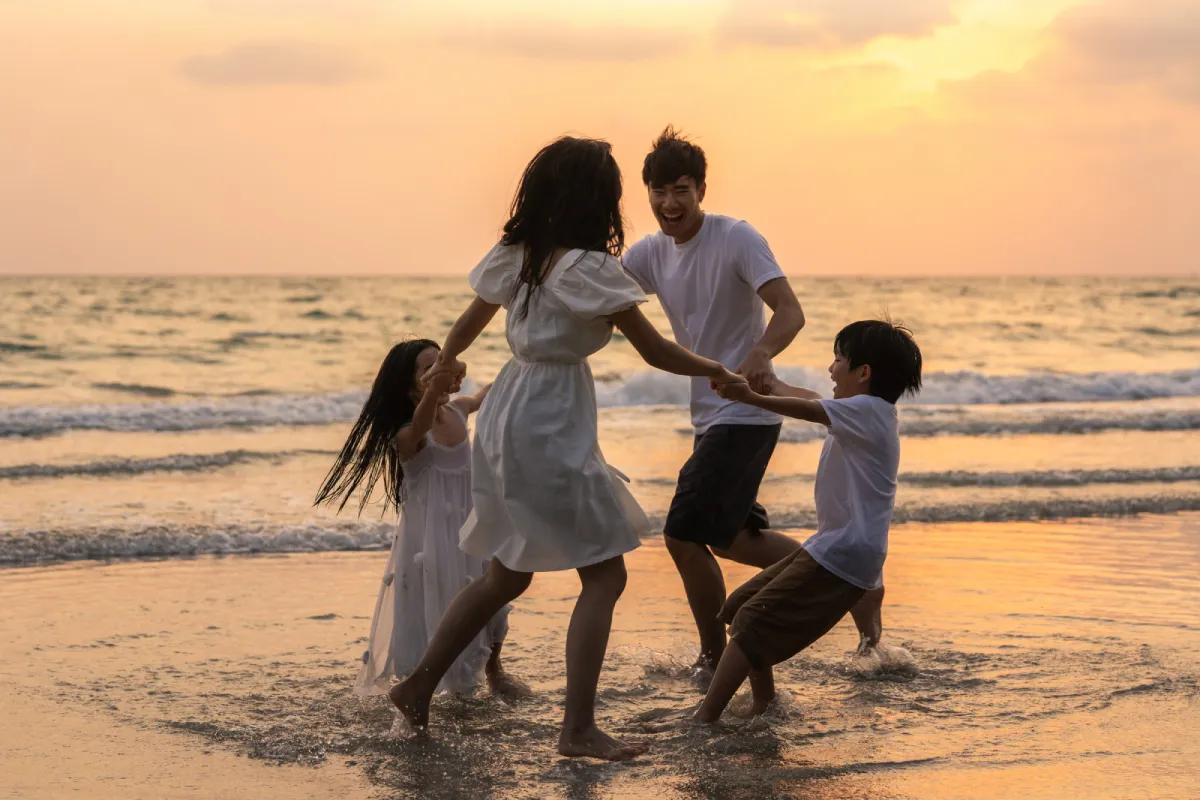
Pasikudah on the east coast is arguably the calmest, shallowest swimming beach on the island and is at its best from May to September. On the west coast, Bentota and Unawatuna offer sheltered swimming bays that are safest from December through March.
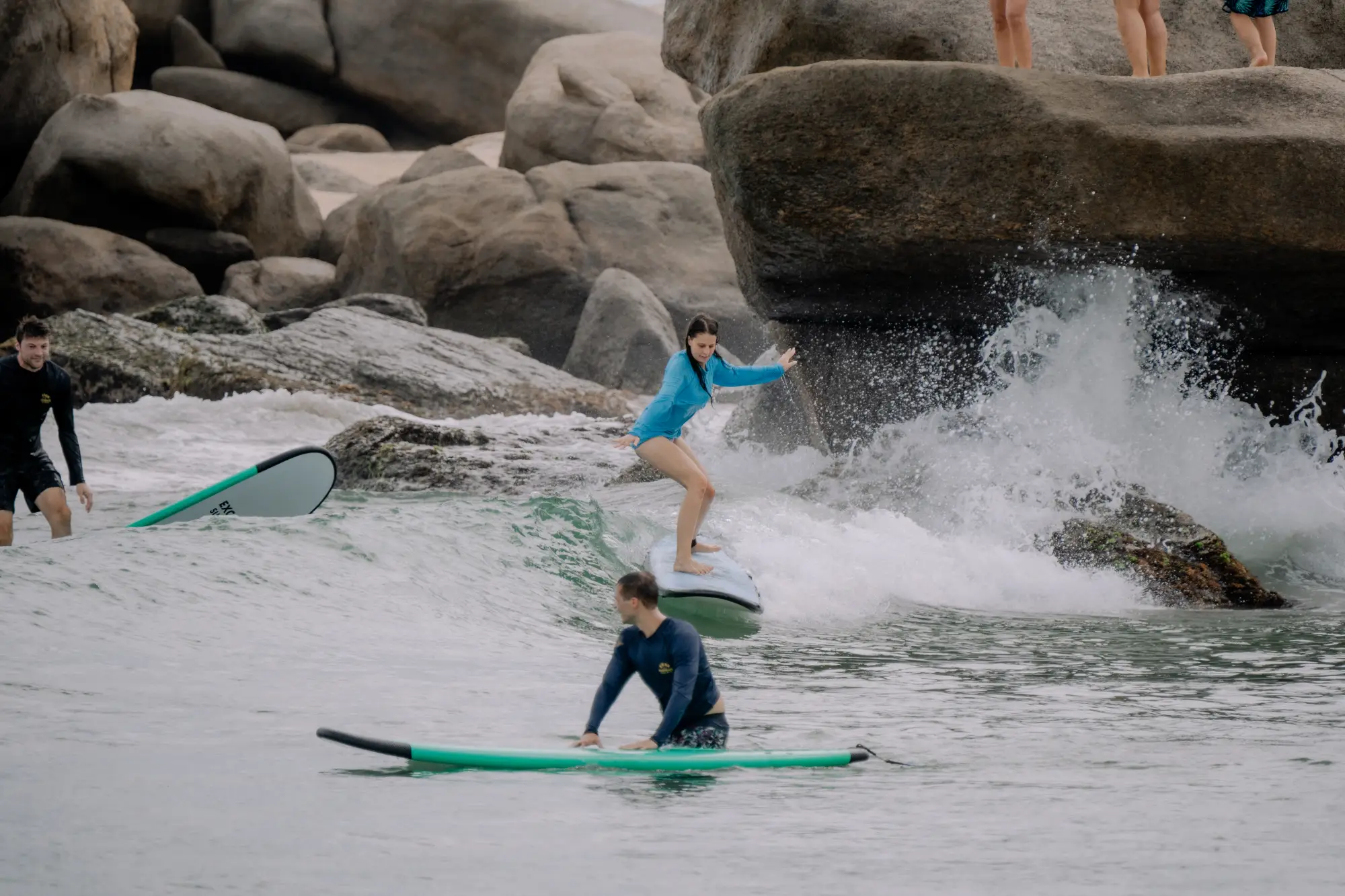
people learning to surf on a rocky beach with waves.

Surfing

Weligama on the south coast suits beginners best from November to April, with gentle, rolling waves. Arugam Bay on the east coast is the destination for more experienced surfers, with its main season running April to October and peaking around July and August.

Snorkelling & Diving

Visibility is best when the seas are calmest, so pair the coast with its dry season: Hikkaduwa and Unawatuna from December to March, and Pigeon Island off Trincomalee from May to September.

Whale & Dolphin Watching

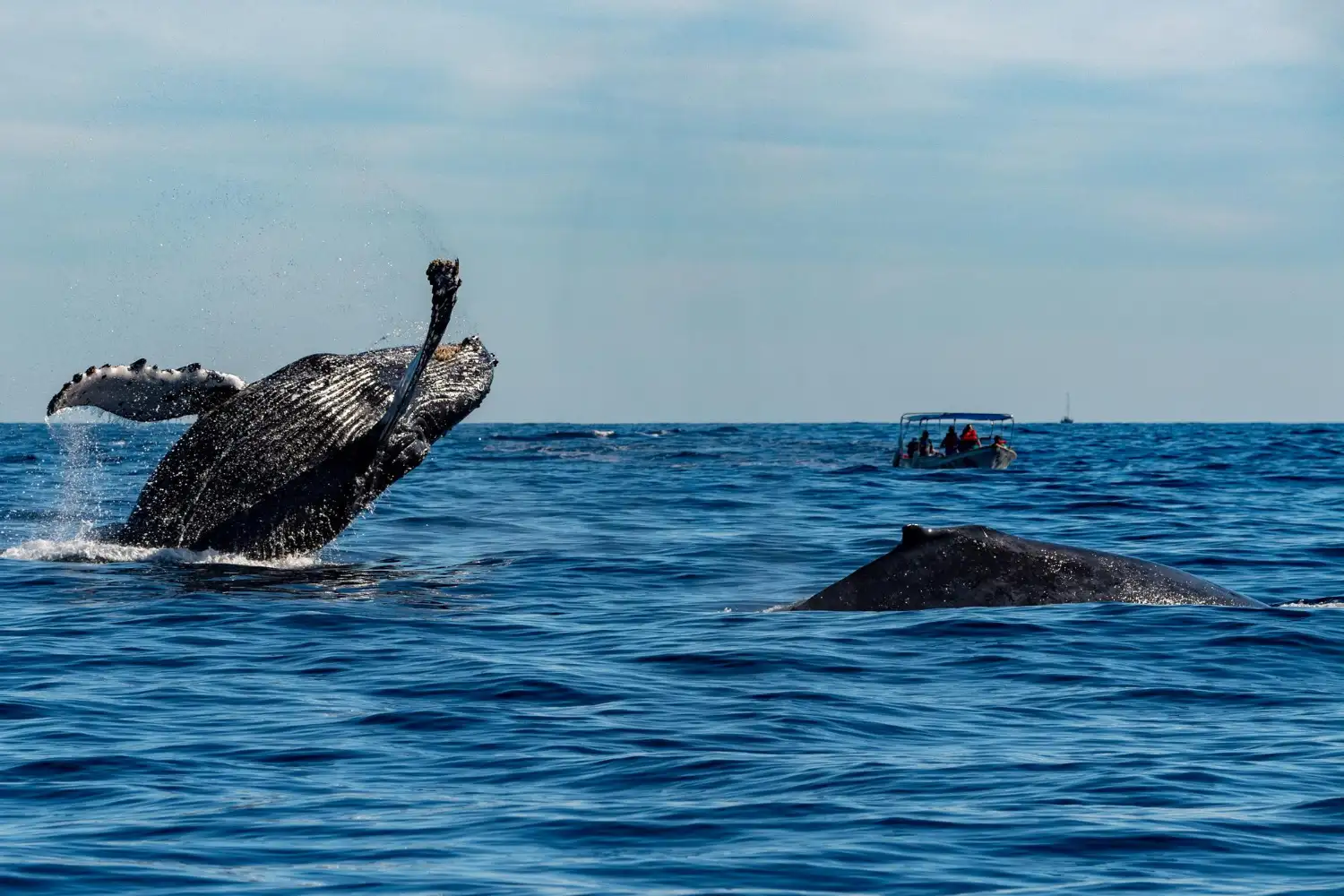
Mirissa on the south coast runs boats from November to April, with blue whale sightings most reliable between December and March. Trincomalee on the east coast offers a second, lesser-known season from May to October.

What About the Shoulder Months?

April and October are inter-monsoon months on the west and south coasts, meaning short, heavy afternoon showers rather than settled rain, alongside noticeably lower hotel rates and thinner crowds. If your dates are flexible and you don’t mind the odd downpour followed by sunshine, these shoulder weeks can be excellent value without a major weather trade-off.

Combining Both Coasts in One Trip

Because the two coasts run opposite seasons, it’s entirely possible to build an itinerary that stays in good beach weather throughout, even outside the classic December-to-April window. A June or July trip, for example, can spend its beach days on the east coast around Trincomalee or Arugam Bay while still taking in the Cultural Triangle and hill country, which are largely dry-season-independent inland. This kind of route works particularly well for travellers who want a longer Sri Lanka trip without gambling on a single coast’s weather. Two weeks is usually enough to comfortably fit both a west- or south-coast stay and an east-coast stay, with the Cultural Triangle or hill country bridging the drive between them.

Peak Season, Shoulder Season, and Prices

Understanding the calendar also helps with budgeting. The two to three weeks around Christmas and New Year are, by a wide margin, the busiest and most expensive stretch on the west and south coasts; well-known beachfront properties in Mirissa and Bentota can be fully booked months in advance. January through March remains reliably dry but eases off slightly in both price and crowd size. On the East Coast, July and August are the closest equivalent to peak season, though even then the beaches feel considerably quieter than their West Coast counterparts, since the East Coast still receives a smaller share of overall tourist traffic.
Travellers chasing the best value tend to look at the shoulder weeks either side of these peaks or accept a small amount of rain risk in exchange for meaningfully lower rates and more room to negotiate on longer stays.

Best Beaches for Sunset

Because the west and south coasts face roughly southwest, they catch Sri Lanka’s best ocean sunsets, particularly from viewpoints like Galle Fort’s ramparts, the rocky headland at Unawatuna, and the open sand at Tangalle. These are at their most reliable during the dry months from December to March, when skies are clearest and least likely to be interrupted by cloud cover rolling in off the sea.

Practical Tips for Beach Travel in Sri Lanka

  • Check the flag system at unfamiliar beaches; rip currents can be strong even during the dry season, particularly around Hikkaduwa and parts of the south coast.
  • Pack reef-safe sunscreen if you plan to snorkel around Pigeon Island or Hikkaduwa’s coral areas.
  • Book whale-watching trips for the earliest available departure; seas are calmest and sightings most frequent in the first couple of hours after sunrise.
  • If travelling in shoulder season, keep plans flexible for the afternoon; mornings are usually clear even when short showers are forecast later in the day.
  • Domestic flights and well-organised road transfers make it realistic to combine both coasts even on a trip of ten to twelve days.

Frequently Asked Questions

What is the overall best month to visit Sri Lanka for beaches?
February and March offer the most reliable combination: the west and south coasts are in peak dry season, and prices have eased slightly from the December-January rush. If your trip is East Coast-focused, July and August are the equivalent sweet spot.
You can, but choose the coast carefully. There is no single monsoon that shuts down the whole island; instead, pick whichever coast is in its dry season during your travel dates and you’ll have a great beach trip regardless of the month.
Yes, and many travellers do exactly this, especially on longer itineraries of ten days or more, using the Cultural Triangle and hill country as a scenic link between a west-coast and east-coast beach stay.
The west and south coasts have more developed tourism infrastructure, easier access from Colombo, and a wider spread of hotels, so most first-time visitors start there. The East Coast rewards travellers who have a little more time and want a quieter, less-developed beach experience.
Not sure which coast fits your dates? Our team tracks Sri Lanka’s seasonal patterns year-round and can match your travel window to the right beaches automatically.

West & South Coast Beaches - Best Time: November to April

This is Sri Lanka’s classic beach season and the one most first-time visitors picture: warm, dry days, calm turquoise water, and some of the most photographed coastline in Asia.
  • Bentota & Kalutara – resort-heavy, family-friendly, calm swimming water, and Ayurveda retreats set among river and ocean.
  • Unawatuna & Galle – a curved swimming bay beneath the historic Galle Fort, easy to combine culture with beach time.
  • Mirissa – Sri Lanka’s whale-watching capital, with boats running daily from November through April.
  • Weligama – a gentle, sandy bay that has become the island’s most popular beginner surf spot.
  • Tangalle & Hiriketiya – quieter, more laid-back stretches for travellers who want fewer crowds without giving up comfort.

Peak season on this coast runs roughly from mid-December to mid-January, when hotel rates climb and the beaches fill up with a mix of European winter escapees and local holidaymakers. December through March is the most reliable stretch for dependable sunshine; April is still good but marks the start of the transition toward the southwest monsoon.

East Coast Beaches - Best Time: May to September

While the west and south coasts are getting their rainy season, the east coast is having its best months of the year: flat seas, blue skies, and noticeably fewer tourists.
  • Trincomalee & Nilaveli – some of the clearest water in Sri Lanka, with Pigeon Island’s coral reef and reef sharks just offshore.
  • Pasikudah & Kalkudah – shallow, gently sloping bays that are about as close to a swimming pool as the ocean gets, ideal for families and nervous swimmers.
  • Arugam Bay – regularly ranked among the world’s best surf breaks, with the season running roughly April through October and peaking in July and August.
June through August is the sweet spot for this coast: the seas are at their calmest, visibility for snorkelling and diving is excellent, and Arugam Bay’s surf is running at its best. By October, the northeast monsoon starts building, and conditions on this coast begin to turn.
Chat on WhatsApp